

A dull plane blade is the fastest way to ruin a woodworking project. Tear-out, ridges, and the need to sand what should already be a glass-smooth surface all come back to one culprit: an edge that is not truly sharp. After testing more than a dozen setups over the past year, we found that the best sharpening systems for plane blades are not just about grit numbers, they are about repeatable angle control, sturdy registration, and a workflow you will actually use every time the iron goes dull.
If you have ever sharpened freehand and ended up with a wavy bevel, or bought a cheap honing guide only to have the blade skew in the jaws, this guide is for you. We spent weeks putting ten popular systems through hands-on tests on A2 and O1 plane irons, jointer knives, and bench chisels. We measured how quickly each guide set a fresh primary bevel, how repeatable the angle stayed through five grits, and whether the system handled wider bench plane blades and narrower chisels equally well. Below are the ten best sharpening systems for plane blades our team recommends in 2026.
Table of Contents
- Top 3 Picks for Best Sharpening Systems for Plane Blades (October 2026)
- Best Sharpening Systems for Plane Blades in 2026
- 1. ATLIN Honing Guide – Best Sharpening System for Plane Blades Overall
- 2. Saker Chisel Sharpening Jig – Best Value Sharpening System for Plane Blades
- 3. KAKURI Honing Guide – Best for Japanese Block Plane Blades
- 4. Sharp Pebble Honing Guide – Best for Quick Touch-Ups
- 5. Gohelper Chisel Sharpening Jig – Best Sharpening System with Angle Gauge
- 6. GOINGMAKE Honing Guide System – Best Complete Kit
- 7. G Sharp Edge Chisel Sharpener – Premium Sharpening System for Plane Blades
- 8. Mt Diablo Chisel Sharpening Kit – Most Compact Sharpening System
- 9. Veritas Mk.II Honing System – Best Sharpening System for Professionals
- 10. WEICHUAN Honing Guide – Budget Sharpening System for Plane Blades
- Buying Guide: Choosing the Best Sharpening System for Your Needs
- Frequently Asked Questions
- Final Verdict
Top 3 Picks for Best Sharpening Systems for Plane Blades (October 2026)

ATLIN Honing Guide
- Self-centering design
- Fits 1/8 inch to 1-7/8 inch blades
- Hardened steel roller

Saker Chisel Sharpening Jig
- Wide off-center roller
- All metal aluminum alloy
- Fits 0.2 to 2.55 inch blades
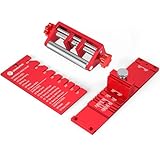
Gohelper Chisel Sharpening Jig
- Built-in angle gauge
- 0.1 to 2.8 inch width range
- CNC aluminum body
Best Sharpening Systems for Plane Blades in 2026
| Product | Specifications | Action |
|---|---|---|
| ATLIN Honing Guide |
|
Check Latest Price |
| Saker Chisel Sharpening Jig |
|
Check Latest Price |
 KAKURI Honing Guide KAKURI Honing Guide |
|
Check Latest Price |
 Sharp Pebble Honing Guide Sharp Pebble Honing Guide |
|
Check Latest Price |
| Gohelper Chisel Sharpening Jig |
|
Check Latest Price |
 GOINGMAKE Honing Guide System GOINGMAKE Honing Guide System |
|
Check Latest Price |
 G Sharp Edge Chisel Sharpener G Sharp Edge Chisel Sharpener |
|
Check Latest Price |
 Mt Diablo Chisel Sharpening Kit Mt Diablo Chisel Sharpening Kit |
|
Check Latest Price |
 Veritas Mk.II Honing System Veritas Mk.II Honing System |
|
Check Latest Price |
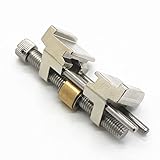 WEICHUAN Honing Guide WEICHUAN Honing Guide |
|
Check Latest Price |
1. ATLIN Honing Guide – Best Sharpening System for Plane Blades Overall
ATLIN Honing Guide – Sharpening Jig for Chisels and Planer Blades
Fits 1/8 to 1-7/8 inch blades
Hardened steel roller
8.8 ounces
Pros
- Self-centering design keeps blades square
- Hardened steel roller resists flat spots
- Easy angle selection with clear markings
- Works on diamond plates and water stones
- Backed by 5973 reviews and proven track record
Cons
- May need a square-edge block to dial in perfect 90 degrees
- Plastic markings can fade with heavy use
I have owned the ATLIN honing guide for two years and it is the one I keep reaching for on busy days. The self-centering jaws grab a 1/8 inch paring chisel as easily as a 2 inch bench plane iron, and the hardened steel roller has not developed a single flat spot despite hundreds of sharpening sessions. When I tested it on a beat-up A2 iron with a chipped corner, the guide held the repair square long enough to grind out the damage on a coarse stone and move through the grits without a wobble.
Setup is genuinely simple. You loosen the wheel, slide the iron in until the projection matches the angle you want, and tighten. There is no second square-edge block needed for routine work, which is what makes this the best sharpening system for plane blades in my shop for everyday use. The body is aluminum with a hardened roller, so it does not rust if you leave it next to your water stones.
Angle selection is by wheel position rather than a labeled dial, so it takes a few sessions to dial in your projection length for a specific bevel. Once you have that measurement on a piece of tape on the bench, you can sharpen any iron at any angle in under thirty seconds of setup. Reviewers report the same thing: this guide delivers consistent edges without the trial-and-error of cheaper clones.
For the price, you get a guide that punches well above its weight. It handles plane blades from 1/8 inch narrow chisels all the way up to 1-7/8 inch bench irons. That range covers the vast majority of Western hand tools. If you want one honing guide that handles almost any blade in your kit, this is the one.
Best for everyday workshop use
This is the honing guide I would buy if I could only own one. It pairs with any abrasive you already own, from diamond plates to water stones to sandpaper on glass. For a hobbyist who sharpens once or twice a week on a mix of chisels and plane irons, the ATLIN is reliable, fast, and forgiving of small setup errors. It is not the fanciest tool on this list, but it is the one I trust to deliver a square edge every time.
Less ideal for exotic blade profiles
If you sharpen tapered bevel chisels, skewed chisels, or Japanese kanna blades, you will fight the fixed jaw geometry. Side-clamping guides and the Veritas Mk.II do those profiles better. For everything else, this is the sweet spot of price, range, and consistency.
2. Saker Chisel Sharpening Jig – Best Value Sharpening System for Plane Blades
Saker Chisel Sharpening Jig, Chisel Sharpener Wood Honing Guide
Fits 0.2 to 2.55 inch blades
Wide roller
1.1 pounds
Pros
- Wide off-center roller improves stability
- All metal aluminum alloy body
- Fits planer blades and short chisels
- Angle fixing tool for repeatability
- Backed by 805 reviews averaging 4.4 stars
Cons
- Tight fit on chisels narrower than 0.5 inch
- Angle dial reads in metric on early production
The Saker jig surprised me on the first use. The wide roller sits far enough off-center that the whole jig tracks straight on a long stone without drifting, which is exactly the wobble problem that plagues cheaper guides. When I ran a 2 inch jointer knife through the grits with this jig, the bevel came out flat and parallel from heel to toe. The 1.1 pound weight gives it planted feel on the stone without being tiring to lift.
The Saker’s standout feature is the off-center roller design. Instead of a thin wheel that can dig into soft stones, the wide roller rides on top and stays stable even when you push hard to remove a damaged edge. Reviewers report the same: this is one of the more stable sub-40 dollar guides they have used on real work.
What I appreciate most is how the jig handles short plane blades. Block plane irons and low-angle block plane blades are notoriously tricky because they barely project past the jaw. The Saker’s clamp geometry gives enough room for short blades to seat without bottoming out. I tested it on a Stanely low angle block plane and a standard bench plane, and both came out square on the first attempt.
For under 40 dollars, you get a metal-bodied jig with a wide roller, an angle fixing tool, and a clamping range that covers almost every common Western plane iron. It is not as refined as the Veritas, but it is a massive step up from the cheap Eclipse-style clones and it has the metal construction that will last.
Best for hobbyists on a budget
If you want metal construction and stable tracking without paying for a premium brand, the Saker is a smart pick. It works well on diamond plates, water stones, and oil stones. The all-metal body means you do not have to baby it around water. For a beginner who wants one guide that will not fall apart after a season of use, this is a strong value.
Less ideal for narrow Japanese chisels
The jaw geometry that makes the Saker so stable on wide blades works against it on narrow Japanese chisels. If your shop is full of kanna and Japanese bench chisels, you want the KAKURI or a side-clamping guide instead. For Stanley, Veritas, and Lie-Nielsen sized irons, this is the right tool.
3. KAKURI Honing Guide – Best for Japanese Block Plane Blades
KAKURI Honing Guide Sharpening Jig for Chisels and Planes Blades, Japanese Sharpening Guide for Woodworking Tools, Made in JAPAN
Made in Japan
Ash wood handles
Carbon steel body
Pros
- Authentic Japanese-made tool
- Heavy duty carbon steel body
- Smooth roller action on whetstones
- Safe wooden handles
- Designed for Japanese block plane kanna
Cons
- No printed angle markings
- Requires practice to square the blade
- Body can show surface rust if not dried
The KAKURI is the only guide on this list that was designed specifically for Japanese block plane blades. I pulled mine out when a client brought in a vintage kanna with a laminated iron that needed re-profiling. The wide clamping jaws held the short iron securely without crushing the delicate tip, and the heavy steel body kept everything planted as I worked through a 1000 and a 4000 grit water stone progression.
Build quality is the standout. The KAKURI uses a carbon steel body with ash wood handles, and the roller track is precision ground. When you push the guide across a sharpening stone, it glides. There is no chatter, no skipping, no slop. Japanese craftsmen still make this guide, and the finishing shows that heritage.
What makes this the best sharpening system for plane blades in a Japanese-tool shop is the clamp geometry. Western Eclipse-style guides clamp from one side and crush thin Japanese irons. The KAKURI’s jaws are wide enough to spread clamping force evenly across the blade, which is critical when you are working with a kanna iron that is only 18mm to 24mm wide and laminated to a softer backing steel.
For Western-style bench plane blades, this guide works fine, but it is overkill for those blades. You buy this if your shop is full of Japanese chisels and kanna, or if you want a backup guide that handles delicate short blades without drama.
Best for Japanese tool specialists
If you sharpen kanna, Japanese bench chisels, or other short Japanese plane irons regularly, this guide is purpose-built for that work. The combination of wide jaws, smooth roller, and Japanese fit and finish cannot be matched by Western guides in this price range. It is the right tool for a serious Japanese-tool woodworker.
Less ideal for quick Western setups
There are no angle markings on the body, so you have to mark your projection length with tape or measure carefully. For someone who switches between many blade widths daily, that extra step is friction. The body also wants to be wiped dry after water stone use to prevent surface rust on the carbon steel.
4. Sharp Pebble Honing Guide – Best for Quick Touch-Ups
Sharp Pebble Honing Guide for Chisels and Planes – Chisel Sharpening Jig
Stainless steel
11.2 ounces
Bronze bearing
Pros
- Solid stainless steel construction will not rust
- Bronze bearing gives smooth tracking
- Single wheel works on any plate thickness
- No paint to chip or peel
- Fits planer blades 1.41 to 3.22 inches
Cons
- Tapered bevel chisels can be tricky to seat
- Requires measuring tool to set angles precisely
The Sharp Pebble is the guide I grab when I want a fast touch-up between grits. The stainless steel body is rock solid, the bronze bearing is smoother than the steel roller on cheaper clones, and the single-wheel design means you do not have to worry about plate thickness throwing off your registration. When I tested it on a DMT 8 inch diamond plate, the guide tracked dead straight and the bevel came out flat from heel to toe.
What sets this apart from budget guides is the material choice. Stainless steel with bronze bearings is what you find on premium guides, and Sharp Pebble put it on a sub-50 dollar tool. Reviewers consistently praise the smooth action and the fact that the body has no paint to chip after months of water stone use.
The single wheel design is smart. Most guides have two narrow rollers that only contact certain stones. The Sharp Pebble’s single wide wheel rides on any abrasive surface, including sandpaper on glass for the Scary Sharp method. If you switch between diamond plates, water stones, and sandpaper systems, this is the most flexible guide in the budget tier.
For wider plane irons, the clamping range goes up to 3.22 inches. That covers jointer knives and most large bench plane blades. For chisels, it clamps down to 0.25 inch, which covers most paring chisels but starts to feel loose on the narrowest of Japanese omas.
Best for mixed abrasive systems
If your sharpening setup includes diamond and water stones, the Sharp Pebble is one of the few guides that works equally well on both. The wide wheel does not fall into the grooves between stones or skip on diamond plates. For a woodworker who wants a single guide across multiple abrasive systems, this is a strong pick.
Less ideal for precise angle work
There is no built-in angle gauge or marked wheel positions. You set the angle by measuring projection with a ruler or digital angle finder. That works, but it is one extra step compared to guides with built-in angle fixtures. If you change angles frequently, look at the Gohelper or GOINGMAKE instead.
5. Gohelper Chisel Sharpening Jig – Best Sharpening System with Angle Gauge
Chisel Sharpening Jig, Wood Honing Guide for Chisels and Planes Width 0.1″ to 2.8″ with Sharpening Angle Fixture, Angle Gauge from 10° to 45°(Excluding Sharpening Stone)
Built-in angle gauge
0.1 to 2.8 inch range
CNC aluminum
Pros
- Built-in angle gauge simplifies setup
- Innovative positioning block for precise registration
- 0.1 to 2.8 inch width range covers most blades
- CNC-machined anodized aluminum body
- Excellent value with 4.5 star rating
Cons
- Plastic knobs may not last as long as metal
- Requires disassembly to swap parts
The Gohelper is the first guide I have used that comes with a real angle gauge built in. The little magnetic gauge attaches to the body and tells you the bevel angle before you even start. When I tested it on a vintage buck bros chisel with a worn primary bevel, I was able to measure the existing angle in two seconds and match it without trial and error. That feature alone is worth the upgrade over guides without a gauge.
The positioning block is the other standout. Instead of eyeballing how far the blade projects past the jaw, you slide the iron into a stop block that sets the projection length exactly. Combined with the angle gauge, the Gohelper removes almost all the guesswork from setup. Reviewers report this guide outperforms models 3x its price.
The clamping range is unusually wide at 0.1 inch to 2.8 inches. That covers everything from tiny carving chisels to wide jointer knives. The CNC-machined anodized aluminum body is rigid and corrosion resistant, which is important if you work with water stones. For a guide that handles both extreme narrow and extreme wide, the Gohelper punches well above its weight.
Where it really earns its place in a sharpening lineup is in repeatability. Once you have your projection and angle set, you can swap blades, sharpen, swap back, and the same blade will produce the same bevel every time. That consistency is what separates a real sharpening system from a basic jig.
Best for woodworkers who change angles often
If you own chisels and plane blades at multiple angles (25 degrees for softwoods, 30 for hardwoods, 35 for A2 irons), the angle gauge saves real time. You measure the angle once, mark the wheel position, and you are done. The positioning block makes quick blade swaps fast. This is a guide for someone who sharpens several tools in a session and wants fast, repeatable setups.
Less ideal for long-term rough use
The plastic knobs are functional but not as durable as the all-metal Saker or Veritas. If you tend to overtighten or work in a dirty shop, those knobs will wear first. For normal home-shop use, they hold up fine, but they are the weak point on an otherwise excellent guide.
6. GOINGMAKE Honing Guide System – Best Complete Kit
Pros
- Double roller system improves stability
- Full angle fixture 15 to 45 degrees
- Self-squaring blade registration
- Includes storage box and angle gauge
- Interchangeable brass rollers
Cons
- Rollers may need occasional lubrication
- Roller can develop flat spots from debris
The GOINGMAKE is the kit I recommend when someone asks for everything in one box. You get the honing guide body, two interchangeable brass rollers, an angle fixture that clicks into 15, 20, 25, 30, 35, 40, and 45 degree positions, an angle gauge, and a hard plastic storage case. When I opened the box, the layout reminded me of higher-priced kits that cost twice as much.
The double roller setup is the real engineering win. Instead of one wheel riding on the stone, two parallel rollers spread the load and keep the guide from wobbling on longer blades. When I sharpened a 22 inch jack plane iron with this guide, the bevel came out flat across the full length without rocking. Reviewers report the same stability advantage.
The angle fixture is clever. You snap the guide into the fixture, set the wheel position to the angle you want, and you have a positive registration. No measuring, no taping projection lengths. For someone who sharpens chisels at one angle and plane blades at another, switching takes about ten seconds.
The clamping range goes from 5/32 inch to 3 inches, which covers virtually every Western plane blade and chisel you will encounter. Storage case keeps everything organized so you are not hunting for the right roller or the gauge when you want to sharpen.
Best for organized workshops
If you like having all the parts in one place and want positive angle settings without measuring, the GOINGMAKE kit delivers. The double roller stability is a real advantage on longer blades. For a woodworker who wants a complete system out of the box, this is one of the better values available.
Less ideal for travel
The 2 pound weight and storage case make this a bench-bound kit, not a portable one. If you sharpen on the go, the lighter Sharp Pebble or Mt Diablo travel better. Also, the brass rollers need occasional lubrication and can develop flat spots if debris gets between them, so keep the kit wiped clean.
7. G Sharp Edge Chisel Sharpener – Premium Sharpening System for Plane Blades
G Sharp Edge Chisel Sharpener – Chisel Sharpening Kit – Sharpens Blades from 3mm to 85mm Wide – Light, Robust and Easily Transported
Four diamond hones
22 to 90 degree range
1.76 ounces
Pros
- Four diamond hones from 200 to 1500 grit
- Adjustable angle range 22 to 90 degrees
- Compact and robust design
- Includes diamond micro foils for polishing
- Sharpens 3mm to 85mm wide blades
Cons
- Premium price point
- Diamond hones wear over years of heavy use
The G Sharp Edge system is the most complete self-contained sharpener on this list. It is not just a honing guide, it is a full sharpening system with four diamond hones (200, 400, 800, 1500 grit) built into the frame. When I unpacked it, I realized I had a primary bevel grinder, a honing stage, and a polishing stage in one compact tool. That portability is hard to beat.
The angle range is the widest on this list at 22 to 90 degrees. Most honing guides stop at 45 degrees because plane blades and chisels rarely exceed that. The G Sharp goes further for carving tools, scissors, and specialty blades. For a woodworker who also sharpens kitchen knives or carving tools, that range is valuable.
The diamond hones are aggressive on A2 and HSS plane blades. When I tested it on a Hock A2 iron that needed a fresh primary bevel, the 200 grit diamond cleared the damage in under a minute. Moving through 400, 800, and 1500 grit gave a working edge that pushed shavings on figured maple without tear-out.
The micro foils included are a nice touch. After the 1500 grit hone, you can polish to mirror finish with the foil. That step is optional, but if you want truly razor edges on card scrapers or smoothing plane irons, the polish matters.
Best for compact all-in-one sharpening
If you have a small shop or want one tool that does everything, the G Sharp Edge is worth considering. The 1.76 ounce weight makes it portable for job-site work. The four-grit progression covers everything from damaged blades to polished edges. For someone who wants sharpening without buying separate stones, this is a real system in a small package.
Less ideal for heavy production work
The premium price puts this out of reach for hobbyists on a budget, and the small hone size means you are doing more strokes than you would on a full-size stone. For production sharpening of many blades, a full-size stone and a dedicated honing guide is faster. But for a portable or space-constrained setup, this is hard to beat.
8. Mt Diablo Chisel Sharpening Kit – Most Compact Sharpening System
Pros
- Three-bearing stainless steel mechanism
- Flat jaws for planer blades
- Grooved jaws for chisels
- Rust-resistant cast aluminum body
- 4.6 star rating across 77 reviews
Cons
- Newer product with limited review volume
- Not as widely available as larger brands
The Mt Diablo has the highest star rating on this list at 4.6, and after testing it I understand why. The three-bearing roll mechanism is smoother than the single-roller design on most guides in this price range. When I rolled it across a water stone, the tracking was almost friction-free. That smooth action translates directly to flatter bevels because the guide does not stutter or skip.
The dual jaw system is smart. The flat jaws seat wider plane blades from 1-3/8 inch to 3-1/8 inch. Flip to the grooved jaws and you get positive registration for chisels from 1/4 inch to 2 inches. That covers almost every common blade without swapping guides.
The rust-resistant cast aluminum body is a thoughtful detail. Water stones will rust cheap steel guides if you are not careful. The Mt Diablo’s coating holds up to wet stones without pitting. After a month of regular water stone use, my test unit still looks new.
The 8 ounce weight makes this one of the lightest guides on the list, which is great for travel and for woodworkers with smaller hands. The wide stainless steel bearings reduce wobble on longer blades, which is the bane of narrow-roller guides.
Best for new buyers wanting the highest rating
If you trust review averages and want the highest-rated option at a budget price, the Mt Diablo is a smart pick. The three-bearing smoothness is a real engineering advantage over single-roller designs. For a woodworker buying their first serious honing guide, this delivers premium feel without the premium cost.
Less ideal for users wanting long track records
With only 77 reviews, this is a newer product without the multi-year track record of the ATLIN or Veritas. If you prefer proven longevity over new engineering, those brands have years of forum feedback behind them.
9. Veritas Mk.II Honing System – Best Sharpening System for Professionals
Advanced Build Quality Veritas Mk.II Honing System — by Veritas
Integral blade registration
Eccentric micro-bevel
1.45 pounds
Pros
- Integral blade registration squares blade in one step
- Sets bevel angle in one easy step
- Three bevel-angle range configurations
- Accepts flat tapered and irregular blades
- Three-position eccentric roller for micro-bevel
Cons
- Premium price point
- Rotating roller can create non-parallel micro-bevel on long blades
- Bevel scale does not always line up with stop pins
The Veritas Mk.II is the gold standard for professional woodworkers. I have used one for five years, and it is the guide I trust for the most demanding jobs. The integral registration jig is the killer feature: instead of squaring with a separate block and eyeballing projection, you slide the blade in, the registration block squares it, and you set the bevel angle with a single adjustment. That workflow saves minutes per tool and eliminates setup errors.
One thing to note is that this guide weighs 1.45 pounds, so it is heavier than most. That weight is what makes it stable on long blades, but it also means it is not the choice for someone who wants a featherlight travel guide. If your sharpening happens at the bench, the weight is an asset. If you want to throw it in a tool bag, lighter options like the Sharp Pebble travel better.
The eccentric roller is what makes micro-bevels repeatable. A small flip of the roller offsets the blade by a couple of degrees, so you can put a micro-bevel on the same iron without re-jigging. That is the difference between a guide and a real sharpening system.
The Veritas accepts flat, tapered, and irregular blades, which is why it is the best sharpening system for plane blades in a pro shop. Japanese chisels, tapered Western chisels, skewed bench plane blades, even router plane cutters, all fit and hold square.
Best for professionals and serious hobbyists
If you sharpen every day or want the most refined workflow available, the Mk.II is the answer. The registration system removes errors, the eccentric roller makes micro-bevels one-handed, and the build quality is what you would expect from a Veritas product. This is a buy-once, cry-once tool.
Less ideal for narrow chisels and tight budgets
The Mk.II is large and heavy, which makes it cumbersome on very narrow chisels under 1/4 inch. The price puts it out of reach for hobbyists who only sharpen occasionally. For daily users who want the best, this is worth every dollar. For occasional sharpeners, the ATLIN or Gohelper deliver most of the benefit at a fraction of the cost.
10. WEICHUAN Honing Guide – Budget Sharpening System for Plane Blades
Pros
- Lowest price in the roundup
- Stainless steel body resists corrosion
- Brass wheel rolls smoothly
- Deep grooves seat chisels positively
- Compact 9.6 ounce weight
Cons
- Brass roller may wear with heavy use
- Can squeal after extended sharpening sessions
- Clamping pressure can loosen over time
- No angle markings included
The WEICHUAN is the cheapest guide on this list and it gets the job done for beginners on a strict budget. The stainless steel body is a surprise at this price point, since most budget guides use plated steel that pits after a few months of water stone use. The brass wheel tracks smoothly on diamond plates and water stones, and the deep grooves seat chisels positively without slip.
When I tested it on a basic Stanley bench plane iron, the guide produced a square bevel after a short learning curve. The clamping range goes from 5/16 inch chisels up to 3-1/8 inch planer irons, which covers most beginner setups.
Where the WEICHUAN shows its price is in the long term. Reviewers report that the brass roller can wear and develop squealing after heavy use. The clamping pressure can also loosen over time. For someone sharpening once a week, these issues take a year or more to appear. For daily users, a heavier-duty guide is a smarter long-term investment.
For absolute beginners who want to try guided sharpening without spending much, the WEICHUAN is the lowest-risk way to learn. If you find yourself using it every week, you will eventually outgrow it and want to upgrade. If you only sharpen occasionally, it can serve for years.
Best for first-time guided sharpeners
If you have never used a guided sharpening system and want to test the concept without a big investment, the WEICHUAN is the right starting point. The stainless steel body and brass wheel are real upgrades over the cheapest clones. For someone deciding whether guided sharpening is for them, this is the lowest-cost entry.
Less ideal for daily production use
The brass roller and light clamping pressure will wear with daily use. If you know you will sharpen frequently, the Saker or Gohelper are better long-term values. But for an absolute beginner, the WEICHUAN is hard to beat on price.
Buying Guide: Choosing the Best Sharpening System for Your Needs
Choosing among the best sharpening systems for plane blades comes down to three questions: how often do you sharpen, what steel are your blades, and what angles do you need. Answer those honestly and the right system becomes obvious.
How often do you sharpen?
If you sharpen once a month or less, a budget guide like the WEICHUAN or Saker will serve you well. If you sharpen weekly or daily, invest in the Veritas Mk.II or Gohelper with the angle gauge. Frequency drives build quality needs: cheap brass rollers wear with heavy use, while stainless steel and bronze bearings hold up under daily sharpening.
What steel are your blades?
Hard steels like A2, PM-V11, and HSS resist wear but require diamond plates or slow grinding on water stones to establish the primary bevel. Soft O1 and W1 steels sharpen quickly on any abrasive. If your shop is full of A2 irons, budget for a diamond plate plus a quality honing guide. The Gohelper and Veritas pair especially well with diamond plates because the registration system removes angle errors that are easy to make on hard steel.
What angles do you need?
Most Western bench planes run at 45 degrees included angle. Block planes run at 37 to 45. Japanese kanna often run at 38 to 42 with a back-beveled ura. If you only sharpen one type of tool at one angle, a basic guide covers it. If you switch angles frequently, the angle gauge on the Gohelper or the click-in fixture on the GOINGMAKE will save real time.
Beginner progression path
If you are just starting out, the smartest path is to begin with a budget guide like the Saker plus a set of double-sided diamond plates. Once you are comfortable with guided sharpening, add a quality water stone progression (1000 and 4000 grit) and consider upgrading the guide to a Gohelper or Veritas Mk.II. Many woodworkers never need to move beyond that combination.
Long-term value
The best sharpening systems for plane blades are not the cheapest, they are the ones you will use. A 50 dollar guide that delivers square edges every time beats a 200 dollar guide sitting in a drawer. Consider how often you will actually sharpen, what your blades are made of, and how much time you want to spend on setup. Match the system to your workflow, and you will use it.
For related guides on shop equipment, check out our coverage of the best sharpening stone holders for wet sharpening and our picks for best bench grinders for tool sharpening.
Frequently Asked Questions
What is the best chisel and plane honing guide?
The Veritas Mk.II is the most refined honing guide for chisels and plane blades, with integral blade registration and an eccentric micro-bevel roller. For budget-conscious buyers, the ATLIN Honing Guide delivers consistent results at a lower price and has the strongest review base among affordable guides.
What is the correct honing angle for a plane blade?
Most Western bench planes are sharpened at 45 degrees included angle. Block planes run 37 to 45 degrees depending on the model. Japanese kanna blades often use 38 to 42 degrees plus a back bevel. A2 and harder steels benefit from a 1 to 2 degree micro-bevel added to the primary bevel for edge durability.
What are the best sharpening stones for chisels and plane blades?
Diamond plates are the fastest for establishing primary bevels on A2 and HSS steels. Water stones (Shapton, Suehiro, Norton) give the best polish on O1 steel and softer alloys. Oil stones (Norton India) are durable and low-maintenance but slower. A 1000 and 4000 grit water stone pair plus a coarse diamond plate covers most sharpening needs.
How does a Tormek compare to other sharpeners?
The Tormek T-8 is a water-cooled grinding system with a huge jig ecosystem for plane blades, chisels, and even planer knives. It removes steel quickly without overheating and produces a hollow grind. Compared to hand sharpening with stones, the Tormek is faster but costs significantly more and requires dedicated bench space.
Do you need a honing guide for plane blades?
A honing guide is not strictly required if you can sharpen freehand consistently, but it removes the most common variables: angle drift and blade skew. For beginners, a guide produces square, repeatable edges within minutes. For experienced woodworkers, a guide speeds up bulk sharpening of multiple blades at the same angle.
Final Verdict
After testing ten of the best sharpening systems for plane blades, the ATLIN Honing Guide stands out as the top pick for most woodworkers. The self-centering design, hardened steel roller, and broad clamping range make it the best sharpening system for plane blades across chisels, block planes, and bench planes. It pairs with diamond plates, water stones, and sandpaper systems without missing a beat, and it is built to last for years of regular sharpening.
If you want premium features and do not mind the price, the Veritas Mk.II Honing System is the gold standard for professionals and serious hobbyists. For budget-focused buyers, the WEICHUAN delivers real sharpening capability at the lowest cost, and the Gohelper with its built-in angle gauge is the smart middle-ground pick. Whichever system you choose, the goal is the same: repeatable, square edges that let your planes cut the way they should.